
 Amanda Vitale, Digital Marketing Manager
How to Optimize Google Vehicle Ads for Car Dealerships
How do you make sure your ad dollars are always advertising the right inventory to the right shopper? Google Vehicle Ads are one of the...
|
How do you make sure your ad dollars are always advertising the right inventory to the right shopper? |
Google Vehicle Ads are one of the most effective ways for dealerships to reach high‑intent shoppers. By promoting real vehicles at the top of search results, they connect inventory to buyers at the precise moment demand is expressed. When implemented correctly, dealerships can expect qualified traffic, stronger engagement, and measurable sales impact.
In many cases, Google Vehicle Ads perform well out of the gate. Then, over time, results begin to level off or decline. Spend continues, but the same vehicles absorb budget while others stall on the lot. The ads are still running, but they no longer feel as effective as they once did.
That drop‑off raises an important question for dealers: How do you make sure your ad dollars are always advertising the right inventory to the right shopper?
Once Google Vehicle Ads are live, many dealerships rely on Google’s automation to manage performance. Performance Max does exactly what it is designed to do, allocating budget toward the vehicles and placements most likely to drive conversions based on historical, on‑platform signals.
Early on, this approach works well. Campaigns learn quickly, shoppers engage, and results follow. Over time, however, inventory changes, market conditions shift, and shopper behavior evolves. When those changes are not reflected in the signals guiding the campaign, performance can begin to level off.
The issue is not that the ads stopped working. It’s that conversion likelihood, as defined by past behavior, does not always align with the inventory on a dealer's lot. Performance Max continues to optimize using the signals it has available, but those signals don’t always reflect changing inventory priorities.
Preventing that drop‑off requires a way to guide Google’s automation with data that reflects current market conditions and vehicle‑level need.
Google Ads need the right guidance to perform better, more efficiently, and more consistently.
This guidance comes in the form of real‑time inventory intelligence, which ensures that Google’s optimization engine is continually being fed current data about which vehicles matter most right now, enabling true inventory‑based advertising automation as conditions change.
When that data stays up-to-date, your marketing dollars focus on the right inventory. Vehicles that require support receive it, while others stop absorbing spend by default. The campaign does not reset, restart, or “learn again.” It stays effective because the signals behind it stay current.
Once real‑time inventory intelligence is in place, the next question is how that information influences Google Vehicle Ads performance. The answer lies in prioritization.
At any given moment, not every vehicle on a dealer’s lot needs the same level of advertising support. Some vehicles are already positioned to move based on current demand. Others may need more budget to sell. Without a structured way to distinguish between vehicles, campaigns continue prioritizing what has already performed, rather than responding to current inventory needs.
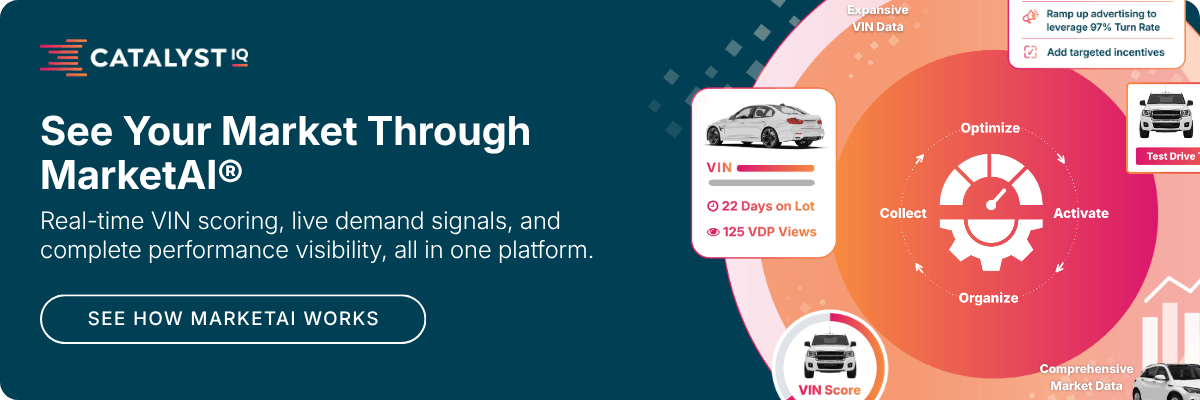
Vehicle‑level prioritization changes how optimization works. Instead of treating all inventory the same, each vehicle is evaluated individually based on current market conditions. Catalyst IQ does this through our proprietary VINScore, which gives every VIN a daily score using real‑time supply and demand data including how competitively a vehicle is priced, how long similar vehicles typically take to sell, how its age compares to the local market, and how quickly comparable inventory is moving. That score helps determine where budget should be applied so your advertising dollars support the vehicles that need help moving off your lot.
This approach moves Google Vehicle Ads beyond basic inventory promotion and into VIN‑specific automotive advertising, where each vehicle is evaluated, prioritized, and supported based on its current position in the market.
Using VINScore changes how Google Vehicle Ads perform after the initial learning phase. Instead of allowing campaigns to rely solely on historical conversion behavior, VIN‑level scoring continuously re‑aligns advertising decisions with current market conditions.
As inventory dynamics shift, the score attached to each vehicle reflects whether additional advertising pressure is likely to help or whether that VIN no longer requires support. Budget naturally moves toward vehicles that need attention and away from those that don't need any help to sell.
This approach prevents performance plateaus and gradual drop‑off. Google’s automation still does what it does best, delivering ads to high‑intent shoppers at scale. The difference is that the signals guiding that automation evolve alongside inventory.
Turning Google Vehicle Ads into a scalable inventory strategy means ensuring performance does not fade as inventory and market conditions change.
=By layering real‑time inventory intelligence and VINScore at the vehicle level, dealerships can keep optimization aligned with what needs to sell next, not just what sold well in the past.
To see how this works for your dealership, schedule a MarketAI demo to get a market‑specific view of your inventory, understand how VIN‑level scoring highlights where opportunities exist, and see how real‑time intelligence can help you capture more demand while making the most of your Google Vehicle Ads investment.


About Catalyst IQ
Catalyst IQ is an integrated automotive marketing platform that helps dealerships make smarter decisions and sell more cars using real-time data, AI-powered insights, and expert human support. From digital advertising and web presence to SEO/AEO and engagement, every solution works together to drive measurable growth.

How do you make sure your ad dollars are always advertising the right inventory to the right shopper? Google Vehicle Ads are one of the...

Most dealership website conversion problems aren't visible in a single report or traceable to one obvious mistake. They live in the small...
-1.png)
After hitting a 20-month high, the gap between vehicles that sell and those that sit is widening—precision is how you close it. At the start of this...