
 Athyna Moore, Director of Sales Enablement
Automotive Marketing Solutions: Digital Advertising and SEO
Long before they reach your lot, shoppers are seeing your inventory in ads and searching for answers online. This guide shows how digital...
Every car on your lot is doing one of two things: Moving or costing you money. Moving aging inventory faster protects your margin, and these four signals tell you when to adjust your automotive digital advertising tactics to do it.
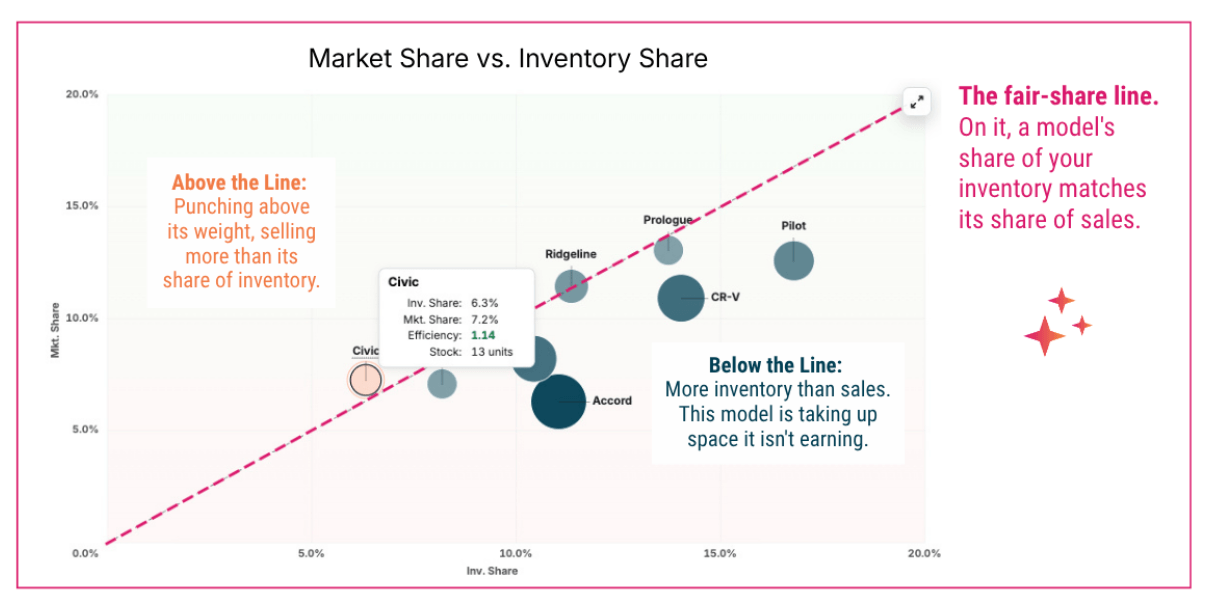
Compare your inventory share to your market share. When your inventory share goes up while your market share stays flat or drops, you have more to sell and the market isn't buying it from you. Either demand is soft, or a competitor is doing a better job reaching those shoppers.
This is your clearest sign to review spend. Check whether your current budget is going to the right places, then decide if you need to increase it or disperse it differently, either across the board or for a specific model or region.
Checking this for every model on your lot by hand would take more time than a dealer has in a day. Real-time market intelligence platforms like MarketAI chart each model's inventory share against its market share, so you can quickly spot the models that aren't selling their share.
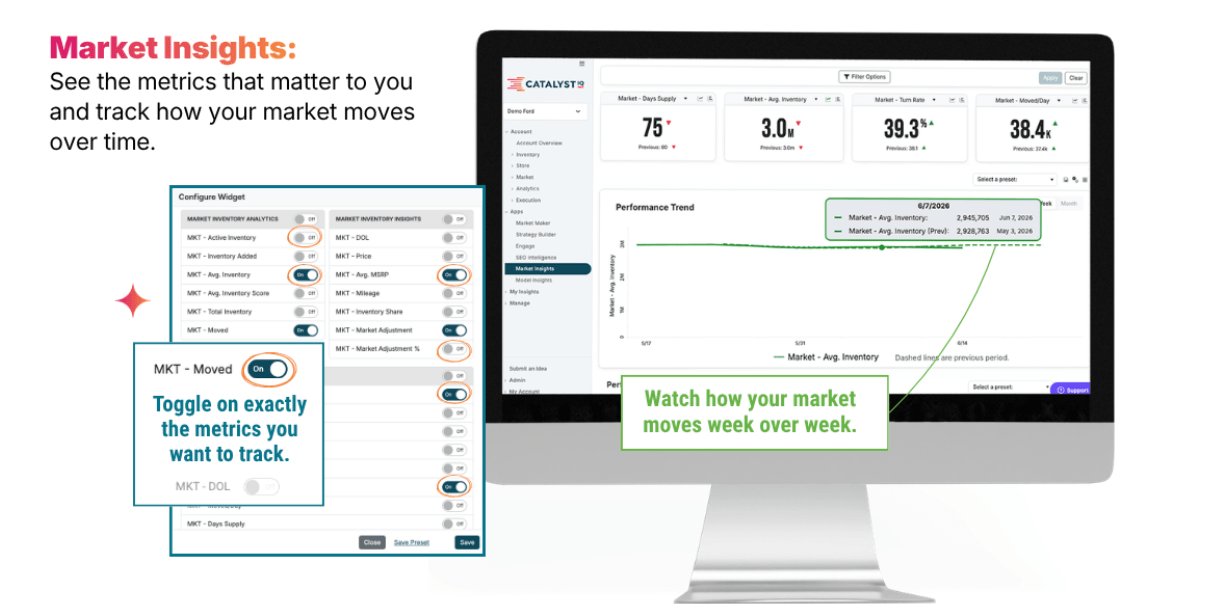
Turn rate tells you how fast you sell what you have. Compare yours to the market's. If your inventory matches the market or runs higher but you're turning it slower, that gap is sales you're missing.
To close it, be prepared to raise your budget in roughly the same proportion as the turn-rate increase you're after. More movement takes more spend when everything else stays equal.
One caveat: Spending more only helps when there's demand to capture. When a unit isn't turning in the market at all, more budget won't save it. Instead of pushing low-funnel spend on a car the market doesn't want, move it up the funnel into awareness-focused advertising tactics—like OTT/CTV video ads—so you build interest first.
This is where daily data pays off. A platform like MarketAI tracks your turn rate and days-to-move against the market every day, so a slowdown surfaces while you can still act on it, not after the car has aged.
When cars sit longer than the market average, check your pricing before you change your budget. Are you as aggressive as your competitors?
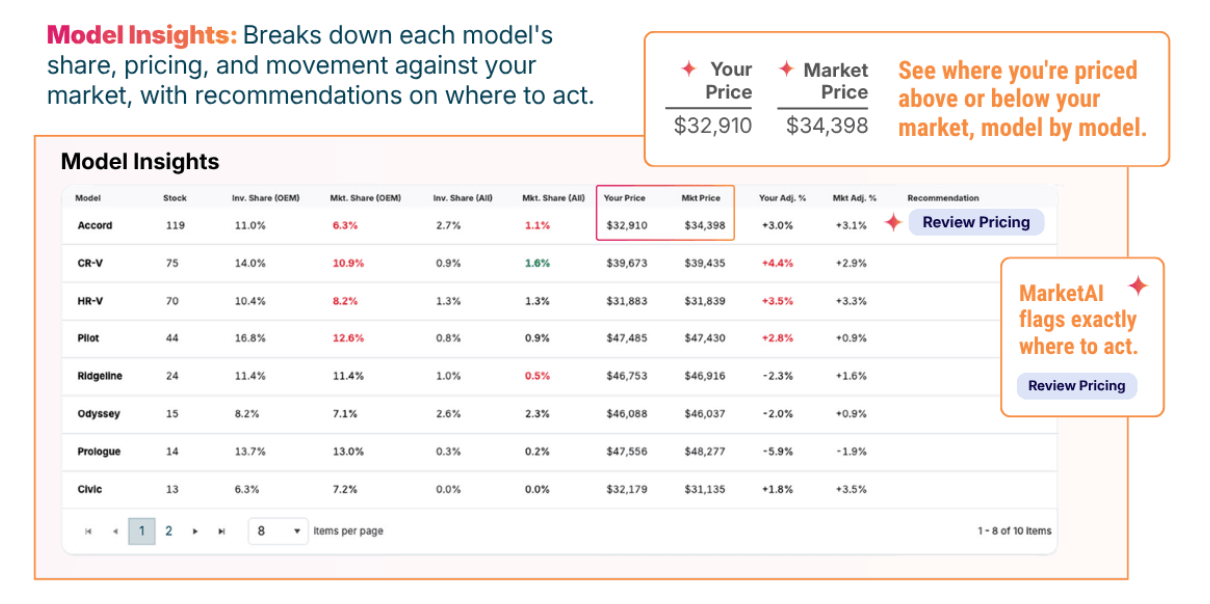
A car priced well above nearby dealers will sit no matter how much traffic you send to it, because most shoppers will travel to save money with the dealership down the street.
You have two options. Cut the price, which is usually the easier and more effective route. Or hold your price and spend more on automotive digital advertising so shoppers see you everywhere and understand why they should buy from you. This works too, but it costs more and takes longer than cutting the price.
The quickest way to tell whether price is the problem is to compare your price to the market price. Tools like MarketAI show the two side by side for every model and flag where you're sitting high, so you know when the fix is a price change rather than more ad spend.
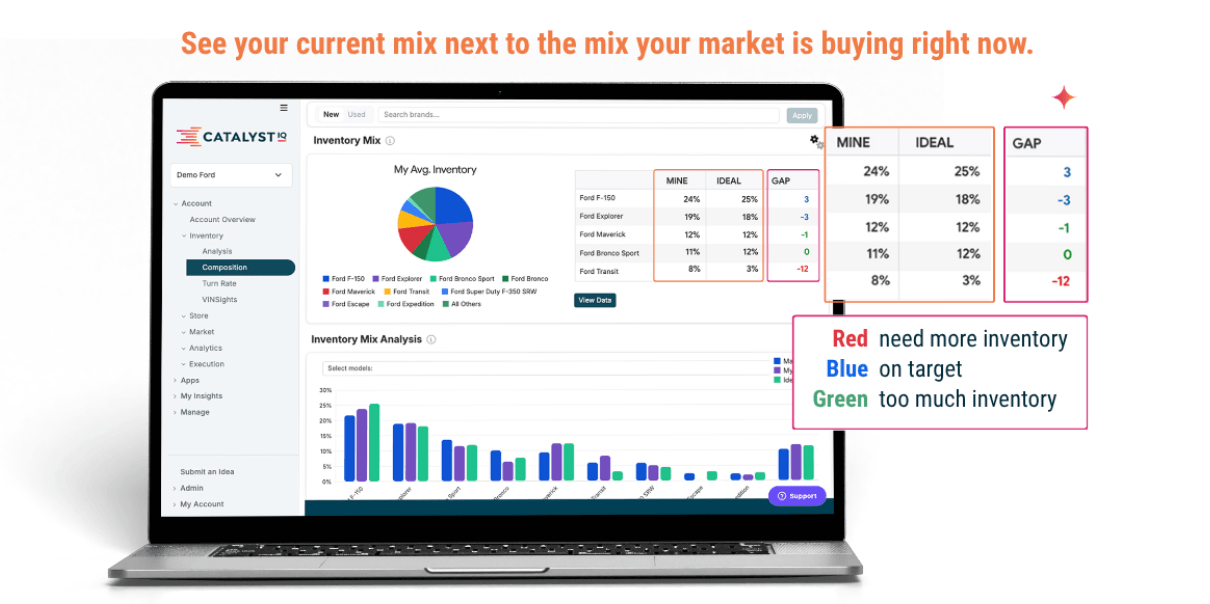
If your inventory is moving slower than the market, the next question is whether you have the right versions of the right vehicles. Start with trim level, then look at whether your new and used mix gives shoppers enough price points to choose from.
Getting this right means comparing your mix to what the whole market is buying, not just what you sell. MarketAI shows your current mix beside the ideal for your area and flag where you're overstocked, short, or on target, so you can adjust what you stock and what you promote.
Inventory share, turn rate, aging, and mix all shift week to week. Dealers who check those signals often can spot problems early, while a budget adjustment can still make a difference. Wait too long and the options get expensive, like a deep price cut or a unit that ages out.
Tracking that data every week and knowing how to act on it is a full-time job. A full-service automotive digital marketing agency does it for you.
Catalyst IQ watches these signals across your market, tells you when and how to adjust, and moves your budget to the vehicles that need it, so your spend always supports the VINs that need help to sell. Book a 20-minute demo to see how your inventory stacks up against your market and where your fastest wins are.

A competitor can change their pricing, discounts, and inventory mix inside of 30 days, and that changes what it takes to move the same car. But frequent checks only help if the data is current, and most dealer reports run 30 to 60 days behind. A platform that refreshes daily, like MarketAI, is what makes a real-time read possible.
You need auto dealership analytics that track the whole market, not just your own store. MarketAI follows every vehicle in your market, including your competitors', and shows which models are gaining, which are slipping, and what shoppers are buying right now, so you can act before you stock or promote.
Watch for: inventory share versus market share, your turn rate versus the market's, how your inventory age compares to the market, and how well your inventory mix matches demand. When any one moves out of line, it's time to look at where your spend is going.
No. When a unit isn't selling because it's priced above the market, more ads won't fix it, so check your price against comparable inventory first. When the market isn't buying the vehicle at all, shift to awareness instead of pouring budget into low-funnel ads.

About Catalyst IQ
Catalyst IQ is a full-service automotive marketing agency that helps dealerships make smarter decisions and sell more cars using real-time data, AI-powered insights, and expert human support. From digital advertising and web presence to SEO, AEO, and lead engagement, every solution works together to drive measurable growth.

Long before they reach your lot, shoppers are seeing your inventory in ads and searching for answers online. This guide shows how digital...

Model Year Changeover season is here. And for dealers, waiting to support 2026s could come with a significant price tag. We are officially...

No one can tell you what your dealership's marketing will cost before looking at your market. What you spend depends on your local competition,...