
 Dillon Nagey, Director of Digital Advertising
What Actually Drives the Cost of Car Dealership Marketing
No one can tell you what your dealership's marketing will cost before looking at your market. What you spend depends on your local competition,...
78% of vehicle shoppers find social media useful when deciding on a new vehicle purchase. It’s no surprise, then, that social media has moved well past the awareness stage to become one of the most active shopping environments in automotive.
So why does it so often feel like the results don't quite match the investment? The answer usually isn't the budget or the platform. It's what's driving the decisions behind the ads — specifically, which vehicles are being promoted, and who's actually making that call.
Here's a closer look at what social media marketing for car dealerships actually involves, how dealership social ads work, where platform automation falls short, and how Catalyst IQ uses real-time market data to make every campaign sell move more inventory.
Social media marketing for car dealerships is the practice of promoting your inventory and brand across platforms like Facebook and Instagram to reach shoppers while they browse. It combines organic content that builds your dealership's presence with paid campaigns that put specific vehicles in front of in-market shoppers.
For most dealers, the paid side moves the metal. At Catalyst IQ, we run social campaigns through Meta, which includes Facebook, Instagram, and Facebook Marketplace. Meta's reach is comparable to Google's, and its targeting tools have matured significantly. That combination of reach, targeting precision, and purchase intent makes social media a powerful channel for putting a specific vehicle in front of a shopper who is actively looking for it before they ever type a question into Google or AI-powered search engine.
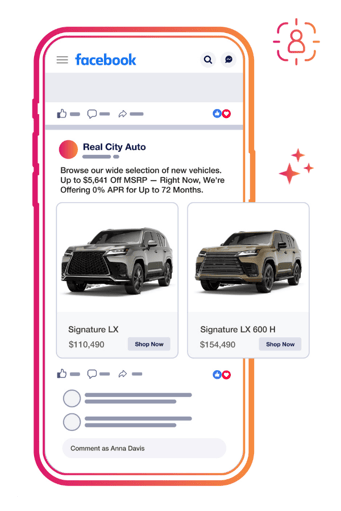
Dealership social marketing works because it reaches shoppers at multiple stages of the buying journey. A shopper who visited your VDP last week and didn't convert can be retargeted with the exact vehicle they viewed. Or a shopper who hasn't found your dealership yet can be reached based on their in-market behavior and geography.
When your campaigns are structured around your actual inventory rather than broad brand messaging, social media stops being a visibility-only channel and starts moving vehicles off your lot faster.
Yes, when the campaign promotes the right inventory to the right shopper. Social media sells cars by reaching active shoppers with real vehicles, real pricing, and real availability at the moment they're deciding. Effective car dealer social media marketing connects that moment to inventory the shopper is actually likely to buy.
The gap between dealers who see results and dealers who don't usually comes down to one thing: Whether the campaign is built around live inventory and local market conditions, or left to run on autopilot. Brand posts and boosted content build awareness. Inventory-based campaigns drive the outcome that matters, which is a sold vehicle.
Facebook, Instagram, and Facebook Marketplace (I.E. Meta) delivers strong results for dealerships because of its reach, targeting depth, and high concentration of in-market auto shoppers.
But within Meta, not all ad formats are equal. Automotive Inventory Ads, or AIAs, are Meta's catalog ad format built specifically for dealerships.
When you run AIAs, Facebook pulls your entire new and used inventory directly from your website feed, including photos, pricing, mileage, and vehicle details, and builds dynamic campaigns around it automatically. As your inventory changes, the ads update to match. When a vehicle sells, it comes out of rotation immediately.
AIAs keep your ads current and your inventory visible. But they still leave the most important question unanswered: How does the platform decide which vehicles need advertising dollars to sell faster?
Car dealerships should use Facebook and Instagram to run inventory-based campaigns that prioritize the vehicles that need help selling, not just the ones already getting attention. Strong car dealership social media management starts with connecting a live inventory feed, using the catalog ad format, and layering in market data to decide where budget goes.
Meta uses a system called Performance-Driven Placement (PDP) to determine which vehicles in your AIAs get promoted. PDP relies on automated rankings, drawing on signals like historical engagement, user behavior, inventory status, and pricing to surface the vehicles most likely to convert. The goal is efficiency: Show the right vehicle to the right person without requiring manual adjustments from dealers or vendors.
While PDP is a powerful system, it only knows what Facebook can measure. It has no visibility into your local market conditions, your aging inventory, or how your pricing stacks up against comparable units down the road. Without that context, it's making inventory decisions with incomplete information.
This is where Catalyst IQ's VINScore changes the equation. VINScore is a proprietary scoring system that evaluates every vehicle in your inventory daily against real local market conditions.
It factors in retail movement of similar vehicles in your DMA, local supply and demand trends, market aging patterns, and your price position relative to comparable inventory. Every vehicle receives a score from 0 to 100 that reflects its current competitive position in your market.
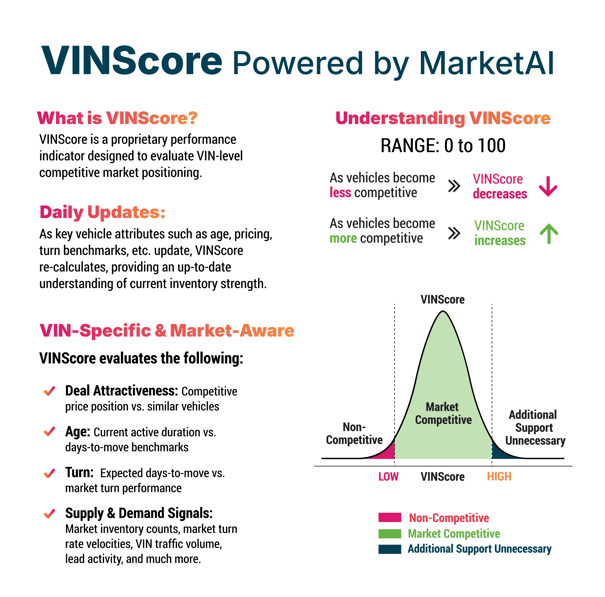
Before your inventory enters Facebook's PDP flow, VINScore helps structure your product catalog by priority. That means the vehicles with the strongest competitive position, or the ones that need the most visibility to move, are organized and weighted before Facebook's algorithm even gets involved.
Rather than leaving prioritization entirely to PDP, dealers can choose to push high-opportunity inventory or surface at-risk vehicles that need extra support. The ad delivery adapts as market conditions change.
While Facebook is an excellent platform for reaching in-market shoppers, ad platforms are only as smart as the data feeding them. That's why VINScore is built on MarketAI, the most comprehensive source of real-time automotive market intelligence available — tracking billions of vehicle detail page views since 2014.
That continuous data layer means your campaigns reflect current demand, and the difference shows up in how your ads perform. When every vehicle is scored daily against real local market conditions, dealers gain a clearer picture of which units need advertising support and which ones will move on their own.
A vehicle that's competitively priced and in high demand in your DMA likely doesn't need ad dollars behind it. That budget is better spent on inventory that needs visibility to move. VINScore gives dealers that level of control and clarity, so campaign decisions are grounded in what the market is telling you today.
Most dealerships running social media marketing have the right instincts. They're on the right platforms, reaching real shoppers, and promoting real inventory. But between Facebook's algorithm deciding which vehicles to prioritize and campaigns running without local market context, there's often a gap between what's being spent and what's actually moving vehicles.
When VINScore brings real-time local market data into the equation, every layer of your campaign works harder. Your budget flows toward the vehicles that need support. Aging inventory gets visibility. Vehicles that will move on their own don't consume ad dollars they don't need. The result is a social media marketing strategy where every decision — from which vehicles get promoted to how your catalog is structured — is working toward the same goal.
That's how dealers can sell more cars faster with social media.
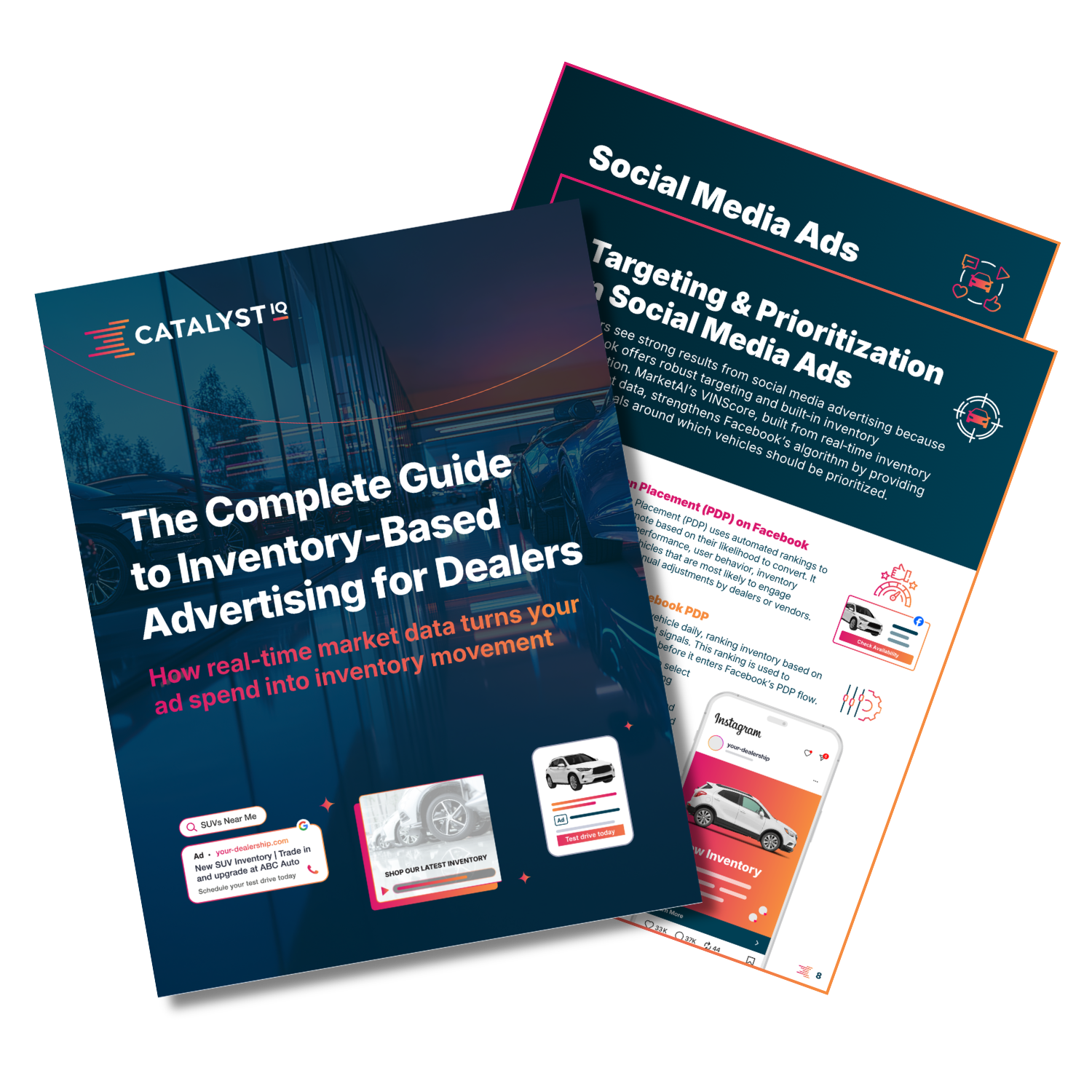
Interested in seeing how inventory-based advertising works across every channel, not just social? Read The Complete Guide to Inventory-Based Advertising for Dealers to see how social, search, display, and video work together when real-time market data drives every decision.
And if you want to see what this looks like for your store, in 20 minutes we'll show you exactly how your inventory is positioned in your market and where your biggest opportunities are right now. Schedule a demo to get started.

The best strategy combines organic brand presence with inventory-based paid campaigns that promote specific vehicles to in-market shoppers. The key is deciding which vehicles get ad support based on real local market conditions rather than leaving that decision entirely to the platform's algorithm. Catalyst IQ uses VINScore to score every vehicle daily and prioritize the inventory that needs visibility to move.
Dynamic inventory ads that feature a specific vehicle with its actual photo, price, and availability consistently outperform generic brand posts for moving metal. These catalog-based ads pull directly from your live inventory feed, so every ad reflects what's on your lot right now. Brand and community content still has a role in building awareness, but inventory-based campaigns drive the measurable sales outcomes.
Regular Facebook ads are built manually and typically promote a dealership's brand, a specific offer, or a model category. Automotive Inventory Ads (AIAs) are catalog-based, meaning they pull your entire vehicle inventory directly from your website feed and build dynamic ads automatically. Every ad features a specific vehicle with its actual photo, price, and availability.
A vendor connects to your website's live inventory feed, which updates automatically as vehicles are added, sold, or repriced. That feed is used to build your ad catalog on Meta. From there, how the catalog is structured and prioritized before it enters Facebook's delivery system is where vendors differ significantly. Catalyst IQ uses MarketAI VINScore to rank and organize inventory by market competitiveness before campaigns go live, so ad delivery is shaped by what's actually happening in your local market.
Ask how they decide which vehicles to promote. If the answer is "the platform handles it," they're leaving prioritization to Facebook's algorithm without local market context. Look for an automotive marketing agency that connects to your live inventory feed, structures your catalog by market opportunity before campaigns launch, and gives you transparency into which vehicles are being advertised and why.

About Catalyst IQ
Catalyst IQ is an integrated automotive dealership marketing platform that helps dealerships make smarter decisions and sell more cars using real-time data, AI-powered insights, and expert human support. From digital advertising and dealership web presence to SEO and AEO for dealerships, and engagement, every solution works together to drive measurable growth.

No one can tell you what your dealership's marketing will cost before looking at your market. What you spend depends on your local competition,...

Google Vehicle Ads showcase the vehicles on your lot right now to high-intent shoppers with placements at the top of Google Search results....

Labor Day weekend—and the sales events that come with it—are right around the corner. For dealers, that means another opportunity to turn inventory...